Students with a serious business idea are welcome to contact Prof. Joeran Beel (English or German). He can support students who want to turn a technical idea, a thesis topic, or a research result into a prototype, a funded project, or a start-up. If you are not yet sure, read our open letter to students suggesting starting a business (German).
When contacting us, please answer the following questions:
- What is your vision?
- What specific problem are you solving?
- Why is your solution technically interesting?
- Why are you or your team well suited to solve it?
- What have you already tested, built, measured, or learned?
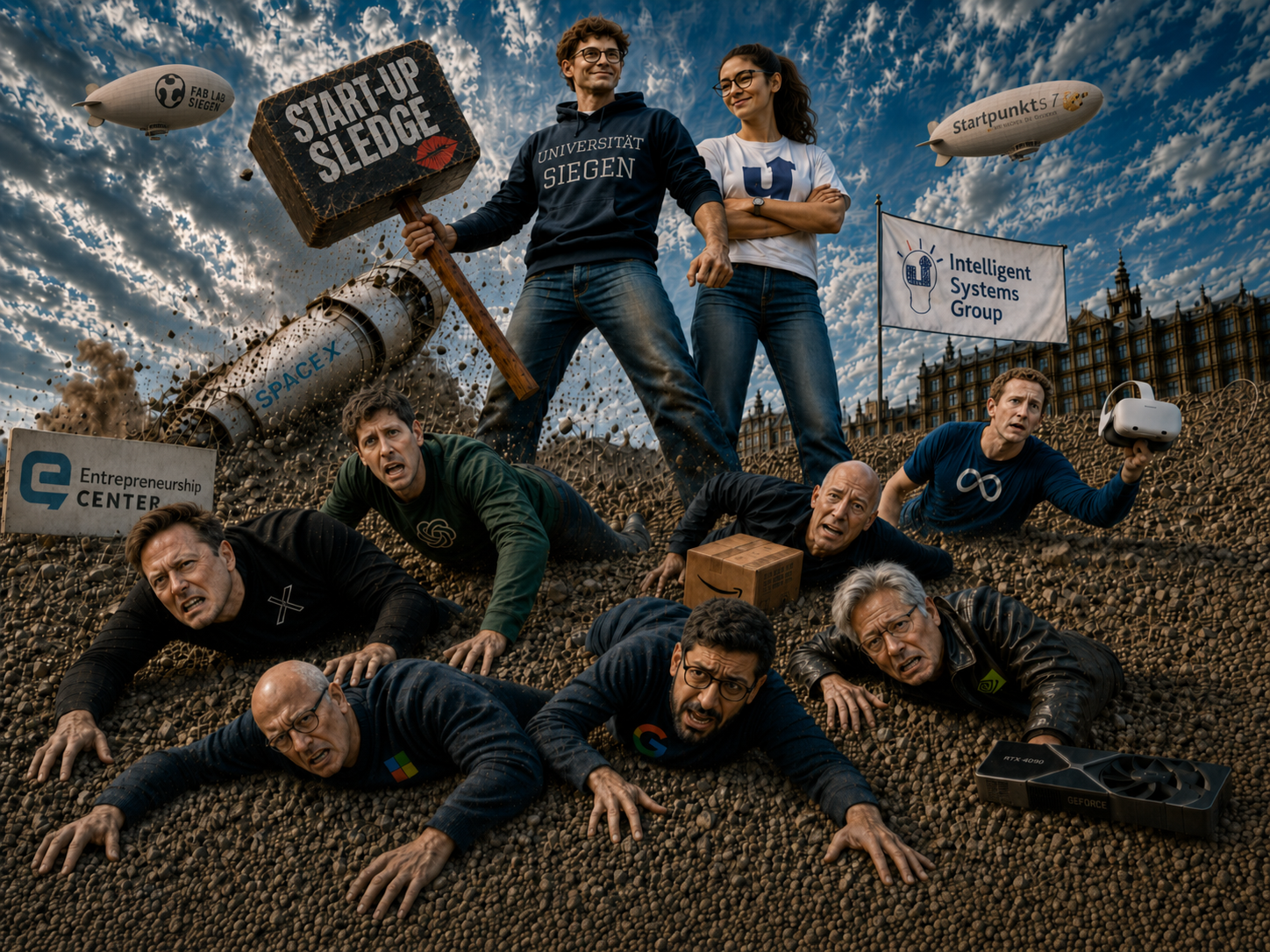
What Prof. Beel Offers
Prof. Beel has founded and developed several technology-oriented start-ups and has experience with the full path from an initial idea to public funding, business-plan competitions, media attention, paying customers, and operational software systems.
He can support students with feedback on business ideas, technical feasibility, product concepts, research transfer, funding applications, business plans, prototypes, and early customer validation. Depending on the project, this may also include access to research infrastructure, computing resources, office space, industry contacts, and guidance on funding programmes such as EXIST.
The Intelligent Systems Group is particularly interested in ideas related to artificial intelligence, recommender systems, personalization, automated machine learning, eHealth, mobility, smart environments, software tools for researchers, and data-driven services. Students do not need a polished pitch deck before getting in touch. A relevant problem, technical substance, and the willingness to work systematically are more important.
From Research Idea to Start-Up
Start-ups rarely fail because of a missing idea alone. The difficult parts are usually more concrete: identifying a real user problem, building a prototype that works outside a demo setting, writing a convincing business plan, finding the first users, finding investors, protecting intellectual property where needed, attracting customers, and deciding whether a project should become open-source software, a research platform, a service, or a commercial company.
Prof. Beel’s own start-up experience covers these stages from different perspectives. Some of his projects began as student research. Some became funded companies. Some resulted in software systems used by tens of thousands of people. Others delivered millions of recommendations per day for paying customers. This background allows him to give practical feedback, not only abstract advice.
Students who want to explore whether their idea could become a start-up are encouraged to get in touch early. A first discussion can be based on a rough concept, a prototype, a thesis topic, or a research result that may have practical value.
Prof. Beel’s Previous Start-Ups
GSM-Schutzengel
Prof. Beel’s first start-up experience began with GSM-Schutzengel, a project that originated from the German youth research competition “Jugend forscht”.
The project started at a time when mobile phones had no touchscreens, no app stores, and only a small fraction of today’s smartphone capabilities. Most mobile phones were essentially devices for phone calls and SMS. Against this background, GSM-Schutzengel was technically ambitious: it transformed an ordinary mobile phone into an automatic emergency-call system for cars.
The system used a shock-sensitive sensor integrated into the mobile phone’s battery to automatically detect car accidents. If a severe crash occurred, the phone triggered an emergency call and enabled the location of the accident to be determined via the GSM network. This meant that even unconscious drivers could be located and helped more quickly.
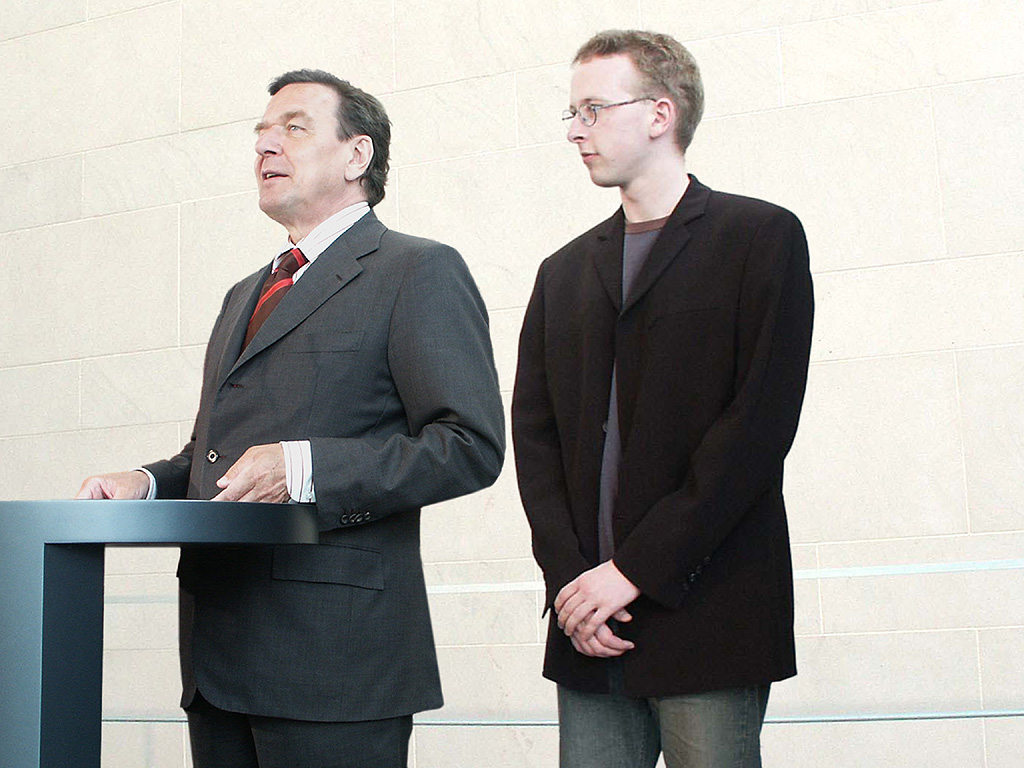
GSM-Schutzengel won second prize at the national Jugend forscht competition, received the Heinz and Gisela Friederichs Foundation Award for outstanding technical achievements, attracted substantial media coverage, and led to an invitation by German Chancellor Gerhard Schröder to honour the team’s research achievements.
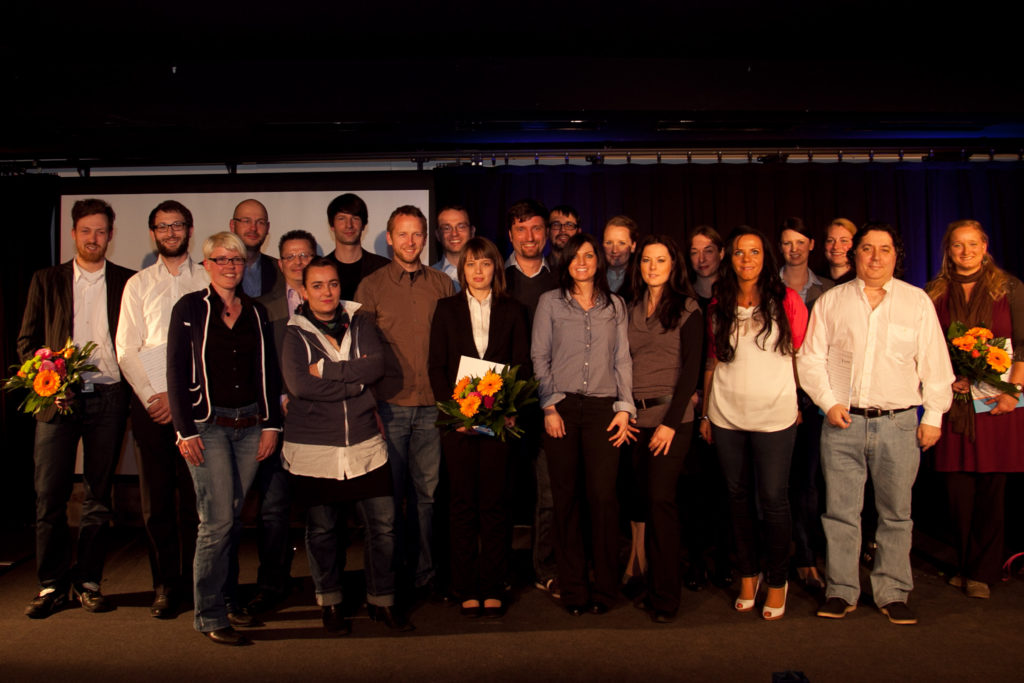
The resulting start-up, GSM-Schutzengel GbR, was supported and invested in by partners including ADAC, AOK, and Infineon Technologies. Its business plan won further awards, including prizes at start2grow, B-P-W, and futureSAX.
The GSM-Schutzengel technology was later sold. Its central idea and some technology — automatic crash detection, emergency notification, and transmission of location information from a vehicle — is now central to the European eCall system, which became mandatory for new car models in the European Union. In this sense, GSM-Schutzengel anticipated a core technology that later became standard in modern vehicles across Europe.
Docear
Prof. Beel’s second start-up was Docear, which he founded and led as CEO from 2011 to 2015.
Docear was an academic literature suite for searching, organizing, and writing scientific literature. It combined reference management, PDF handling, mind mapping, academic search, and research-paper recommendations in a single system. Docear grew out of Prof. Beel’s doctoral research and was used by more than 50,000 researchers worldwide.
Docear was not only a research prototype. It was a funded and award-winning start-up project. It received substantial public funding, including EXIST start-up funding, ego.START seed funding, SIGNO patent and prototype grants, and a KfW start-up coaching grant.
Its business plan won first prize in the first and second rounds of the ego.Business competition. It also received recognition in the B-P-W business-plan competition.
Docear showed that academic software can become more than a publication. It can become an open-source platform, a research infrastructure, and the basis for a start-up.
Darwin & Goliath
Prof. Beel’s third start-up was Darwin & Goliath, an Irish ADAPT spin-out. Darwin & Goliath developed recommender-systems-as-a-service for small and medium-sized enterprises. The goal was to make personalization, product recommendations, and automatic algorithm selection available to companies that did not have their own machine-learning teams.
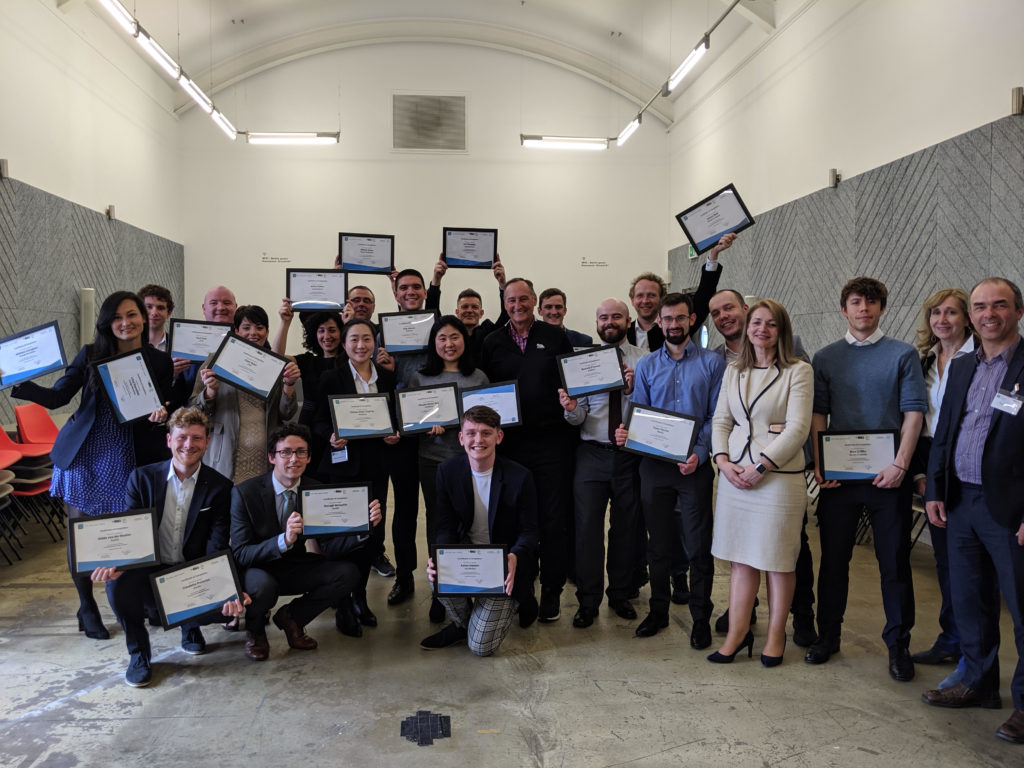
The start-up received a €328k Enterprise Ireland Research Commercialisation Fund grant to spin out a company in machine-learning and recommender-system APIs. Darwin & Goliath was also named one of the Top 10 start-ups in Ireland in the NDRC / Ireland Funds Business Plan Competition.
Technically, Darwin & Goliath combined multiple recommender-system frameworks, automated A/B testing, meta-learning, and per-instance algorithm selection. Commercially, it operated for paying customers and delivered millions of recommendations per day.
Photos
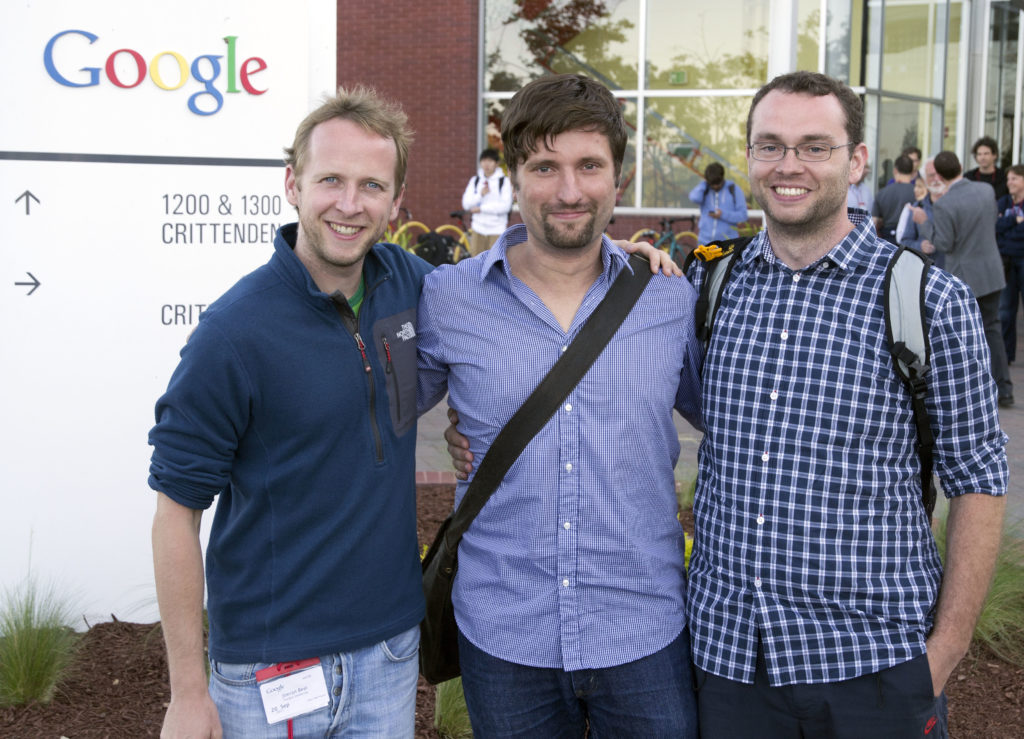
The following photos illustrate some of the previous business start-ups and the teams and events surrounding them.